Showing posts with label trips. Show all posts

Sunday, June 14, 2015

Top Fives of Texas


I don't like doing trip reports on this blog, but I do like doing whatever the hell I want to. So here's a trip report.


I went with two friends, Jason and Zach, to South Texas for a few days in early June. We saw a crap-ton of birds, ate a crap-stone of great food, and had a crap-kip of good times. Here are some highlights, recounted in a Top 5 format, for some reason.

Best Meals
3243. Pepe's in Harlingen
3242. being hit by a car
4. Ultimo Taco in Brownsville

3. Ribs at Cowpokes BBQ in Pearsall, TX.

2. Every single meal at Laredo Taco Company in Stripes Gas Stations throughout south Texas. Fresh tortillas made for you in a gas station!
1. Barbacoa tacos with bright red hot chili sauce at Roadside Inn Meat Market, Hidalgo Texas. We were hot and tired and driving around looking for some food. We pulled into the first place we saw that had a sign for Tacos out front (but, like, 90% of stores in Mission have tacos, even muffler repair stores, it seemed). It was about 2pm, though, and the kitchen in Roadside Inn was closed. After looking around for a few minutes to try to piece together a meal, some guy came out from the kitchen holding a styrofoam container saying something to the effect (in Spanish) of: "Oh well we have this barbacoa, you want this?" Yes, we did. Standing out front of the restaurant scooping up the juicy meat with fresh tortillas and dousing it with spicy red sauce ... it was just the kind of surprise moment I love about birding.


Best Dogs
5. The dog that kept barking at us while we were looking for Ringed Kingfishers.
4. The skinny Chihuahua that almost ran in front of our car that time.
3. The yappy white dog in the purse in Leakey.
2. The puppy that Jason pet next to the breakfast taco stand in Sabinal.
1. Tulip, the rescue dog that we met waiting for Red-crowned Parrots in Harlingen.

Weirdest Ladies
5.
4.
3. The butterfly lady who yelled at me at the NBC for walking too fast when she was looking for a Gray Cracker
2. Stripes worker who really wanted to give Zach a fork
1. Paranoid waitress/conspiracy theorist in Leakey, Texas

Friday, June 20, 2014

A Bunch of Photos From My Trip to Alaska


I don't like posting trip reports.  When I started this dumpy website, I wanted to fill the gap in the bird blogosphere between Hey Here's A Cardinal In My Backyard bird blogs and Here Is Some Insane Endemic Trogon I Discovered On An Island blogs.  Reports of my lame 30-species-days were not my area of interest.

But, dear reader, screw you.  It's my damn website and if I go to Alaska and see a ton of cool shit and lug around some huge lens everywhere to get pictures, then you're going to have to look at them.  So buckle in.

A quick note - my autofocus doesn't work.  I lucked into a Canon 30d camera body when my friend, it's previous owner, dropped it into a saltwater swamp.  He went to upgrade, I inquired about the condition of the damp body, he said it sorta worked, the rest is history.  Most of the time the thing works fine, but the electronic connections are rusty and there's not much communication between the lens and the body.  So some of the photos aren't that great and aren't in good focus but who cares.  Just so you know.

I traveled with my buddy Jake to Anchorage, Homer, Seward and Nome, Alaska.  I got 21 ABA lifers.  140 species total.  I drank a bunch of beers.  I saw musk oxen, sea otters, killer whales and guys smoking crack.  Here are some of the birds.

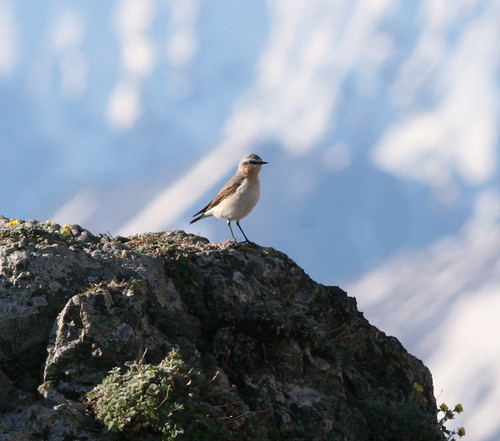
Northern Wheatear
Northern Wheatear

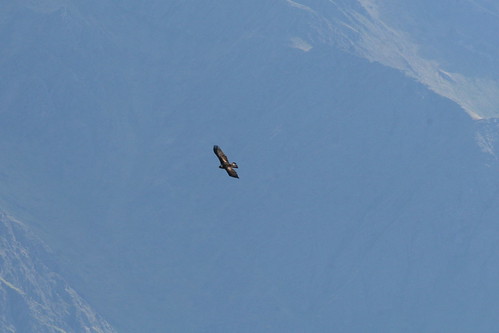
Golen Eagle
Golden Eagle

Monday, February 2, 2009

Dog Bar Gulls


Okay here's a look at the gulls I see on this breakwater. Click on the picture to enlarge.


Saturday, January 10, 2009

Northern Hawk Owl - Bristol, Maine


Look, I started this site with the idea that I would post nothing but interviews.  Every other birding site I read was some variation on "Hey look at this bird I saw near my house," and I wanted to do something different.  


But, hey, look at this bird I saw near my house!

A Northern Hawk Owl!  Actually, I drove an hour to Bristol, Maine to find this lovely guy (or gal) and stood for half an hour in 10 degree weather looking at it.  Totally worth it, it was beautiful.  I also saw a Ruffed Grouse while I was there and got to spend an hour seawatching at Pemaquid Point afterwards.  Here are some pictures (I have more, but it was hard to tell when the bird was looking at me, and so most of the other in-focus pics are of the back of its head):


Also, not all bird blogs are lame, I'm just being a snob.  There are a ton of great, informational, in-depth sites out there that I hope someday to either emulate or destroy.  Emulate, mostly.  

Sunday, January 4, 2009

Tufted Duck in Westbrook, Maine


I mean...what did I do?  What did I do to deserve all these awesome birds delivered to my doorstep?  Just days ago I gave thanks to the birding gods for my 2008 bounty of rare birds, thinking that last year's feast would mean this year's famine.  


Not so.  

After spending a beautiful morning birding Biddeford Pool I got an email (good lord, iPhone, what would I do without you?) reporting a possible Tufted Duck in the Portland-area city of Westbrook.  Yeah.  No big deal, just a duck that usually winters in the UK.  This is Maine, remember?

So I went up and there he was, right off Main Street.  Easy peasy, right?  Well maybe not.  There is some talk on the Maine Birding List about whether or not this bird is a pure Tufted or has hybridized with either a Ring-necked Duck or a Scaup.  I met my friend Doug at the site, and we did not see much evidence of hybridization aside from the shorter-than-expected tuft.  However, my new Kaufman Field Guide (thanks, Santa) specifically notes that tuft length is not a determining factor.  Likewise, pictures of Scaup/Tufted hybrids do not match, as our bird was completely lacking the back-barring shown in that photo and in the Sibley drawing.  


Saturday, October 11, 2008

European Golden-Plover in Scarborough, Maine


Look, it's hard to post thoughtful interviews and explorations of the birding world when so many goddamn awesome birds keep showing up in Maine to distract me.

Today I had planned on sleeping in, cleaning my place and meeting friends for lunch. However, a morning email check forced me to reconsider my plans: a European Golden-Plover had been found at Scarborough Marsh. Did you hear that? A European Golden-Plover. Never been seen in the lower 48 states. Room-cleaning can wait.

I got to the marsh at 1030, and iphoned up an email which told me that the bird had flown in the direction of Seavey's Landing (right below where it says "Scarborough River" on the map below) at 10. So there I went. Nothing. I waited there for the tide to lower with about 6 other birders from Maine and Mass. A few birds here and there, including a fake-out Black-bellied Plover and a FOY Pine Siskin, but no Europeans.


View Larger Map

At 1:30, two other birders and I were getting antsy and decided to walk out into the marsh from Eastern Road (see the road that shoots off onto the river, about the "9" in the map above? That road keeps going straight all the way across the marsh and is the famous Eastern Road). And so we did. For about an hour and half we trekked across the grasses, spooking up occasional shorebirds (including Snipe, Pectoral Sandpipers, a White-rumped Sandpiper and my Maine-first American Bittern), but finding no Plover. As the three of us (myself, a Mass. birder named Jeff and another Mass. birder who's name I didn't get) turned back, tired and hungry, we met my friend Robbie walking across the pannes.

"I just flushed the bird" he said, "it's around here somewhere." Unbelievable. Robbie is an excellent birder, and within minutes he had refound the bird and we were all getting full-scope views. I got some pictures, but, as is my thing, they aren't very good.


Much, much better pictures from a Mass. birder named Richard Heil can be found here.

The bird is a transitional adult, and is a real beauty. Huge thanks to Rob for pointing us in the direction of the bird.

One final note: Apparently some people watching from Seavey's Landing did not like the fact that Jeff, the other MA gentleman and myself were walking though the marsh. Local birders know that walking through the marsh is perfectly fine once nesting season has ended. There were plenty of hunters in the marsh today. I consider myself sensitive to bird-chasing issues, and had there been any rules against doing anything that I did, I would certainly have followed them. It's also interesting that once the bird was refound, all of those birders who were heckling us from the shore were the first ones bounding into the pannes with their scopes.

Monday, October 6, 2008

Barnacle and Greater White-fronted Geese in North Yarmouth, ME


Let the good times roll!

First it was a Northern Wheatear in Gray. Then it was a White-winged Dove just down the street in Portland (which, to my knowledge, did not return after I watched it fly off). Now there are geese in North Yarmouth.

The place is Thornhurst Farm in North Yarmouth, a lovely working farm with rolling hills and fields. The place is always a great southerly migration spot for Canada Geese...and whatever other birds get caught up in the flocks.

A few days ago I went up to find the reported Greater White-fronted Goose, and today I returned and found the reported Barnacle Goose. Good times all around. Here are some terrible pictures:

Greater White-fronted, front and center, head down looking left.


Barnacle Goose, facing right, just over the cow's left ear.


Barnacle Goose, looking at camera, over the big cow's butt.


The question with Barnacle Geese is whether they are wild vagrants or escaped domestics. I don't really have anything to say about it. The usual mark of a domestic bird is a big, deep belly - fat accumulated from a comparatively sedentary life. To me, this bird did not appear any fatter or deeper than any of the other geese. Of course, much more study of this bird is required to make the best decision.

Secondly, I was unable to find any of the handful of Cackling Geese present at the location. Cackling Geese are a lot more difficult to pick out of a flock than a Barnacle or Greater White-fronted, and time has not permitted me to linger at the farm, so it looks like I'll just have to take another trip to the farm.

Friday, October 3, 2008

White-winged Dove in Portland, Maine


4:38 PM: Received e-mail report of a White-winged Dove on Washington Avenue in Portland.

5:16 PM: Leave my house.
5:30 PM: Pull into the First Baptist Church at Washington and Canco.  A few birders are in the lot, but the bird is nowhere to be seen.
5:31 PM: A grungy-looking-but-unmistakable White-winged Dove hops into some bare branches right in front of us.  
5:34 PM: After a few minutes of photographs, the bird tears out of the tree and flies south, toward some pines at the Tamerlane housing complex.  I was unable to tell whether or not it landed there or kept flying.
6:00 PM: Back at home enjoying a delicious sandwich.

FIN


And while we're on the topic, there is a great little marsh on the other side of the parking lot from where this bird was discovered. I've birded there a few times (it's right behind the Portland office of the Maine DEP, where I worked this summer), but never long enough to see if it might live up to its potential. Maybe next spring.

Friday, September 19, 2008

Northern Wheatear in Gray, Maine


I was fortunate enough to catch up to the stray Northern Wheatear that was discovered yesterday in Gray, Maine. It was at the top of Dutton Hill, a beautiful little blueberry-barren-topped knoll just off the turnpike. I showed up at 7:45 and was the only person there. I found the bird after about 25 minutes of nervous searching, and had great looks for the whole hour I stuck around. Just an absolutely beautiful morning.

This is the first look at the bird, a nonbreeding adult [eds. note: Expert identifiers are now calling this bird a juvenile/1st year bird.  Thank goodness for listservs!].


Here's some wheatear information. Check out how not-close they live to Maine! Key ID points here are the white rump, the white supercilium and the overall buff color.


At one point the bird flew up to the top of a tree . . . an odd place for a bird that prefers tundra, beaches and grasslands.

Thursday, August 28, 2008

A Few Scarborough Marsh Photos


A couple days ago I birded the pannes off Eastern Road, in Scarborough (Maine) Marsh with my friend Doug Hitchcox. It was an absolutely stellar day, highlighted by three Stilt Sandpipers (life bird for the both of us) and three Northern Shovelers - a bird that is uncommon in Maine. Doug was nice enough to send me a couple pictures he took, and I'll share them with you.


Although there are hundreds of fish-filled ponds in the Marsh, all the herons (and other large waders) congregated around one at a time. Doug and I assumed that this was either for social reasons or because it somehow made catching fish easier. Here is a shot of one of those ponds and its birds. I see Great Egret, Snowy Egret, juvi Little Blue Herons (they're white with blue/black bills instead of Snowy's yellow bills) and some dark birds that are either adult Little Blues or Glossy Ibis.


Here are those same birds in flight. There were a lot of birds-of-prey around: Doug and I saw Cooper's and Red-tailed Hawk, Osprey, Bald Eagle and Northern Harrier. When the smaller raptors (Cooper's and Harrier) would buzz the marsh it was mostly sandpipers and other waders that would take to the air. When a pair of Eagles came into view, however, it was the herons that got spooked. The sight of nearly a hundred giant herons in the air above our heads was really something. Note the four Glossy Ibis in this shot (not sure what the dark bird in the back is...). Below the treeline I can see a Yellowlegs sp. (white rump, middle of the photo) as well as a bunch of smaller birds.


Here's a shot of one of those Northern Shovelers. We were also pleased to identify a whole bunch of Green-winged Teal in the Marsh - birds we assumed to be first-of-years for the area. Thanks to Doug for the shots.

Thursday, August 21, 2008

Birding on the St. Lawrence


It always kinda weirded me out that there exists an entire civilized country north of Maine.  In the States, Maine is thought of as the Great White North, all frigid and isolated.  That there was a country that didn't even begin until after the most northern of Maine's northern forests had passed just seemed illogical.  But exist it does!  And, as proof, my girlfriend and I spent a couple days there, along the St. Lawrence River.


Now, this wasn't a birding trip, but of course I took every opportunity to find birds wherever I could.  I really had no idea what I was in for: there aren't a lot birding websites for the St. Lawrence and very few eBird locations on the St. Lawrence east of Quebec City.  [Aside #1: eBird, I love you but you need to make it easier for me to search birds by location.  When I am preparing for a trip I want to be able to easily plug in my location and see what other people have seen there.  I could just be an idiot, but I can't figure it out.  Aside #2: How did Maine sneak into the top spot for Checklists Submitted in August? What's up with that?]

So we left from Portland and headed north.

Interesting stop: Mars Hill Wind Farm in Mars Hill, Maine.


It's no secret that I love wind power, and I have to say that I was filled with pride at seeing Maine's only (for now) large-scale wind farm in full glory.  Mars Hill, the hill, seems to rise out of nowhere (this is flat potato country), and really towers over the Mars Hill, the town.  The 28 turbines were spinning like mad.  I took these pictures at a gas station in town and while I was there I asked the woman at the counter how she felt about the project (some people living close to the turbines have complained about the noise):  "Doesn't bother me, I don't live close to them."  

"Where does the power go?" I asked.  "Canada."  She replied with a smirk.

[Aside #3: While in Quebec I saw another set of turbine rotors (4 total) and a nacelle traveling from east to west.  I wonder where they were made and where they were going?  Starting a wind turbine construction company would really help Maine's economy...]

Riviere-du-Loup, Quebec

One reason we wanted to go to the St. Lawrence was for the epic whale-watching.  At a certain spot on the river, where the warm water of the Saguenay River meets the cold subarctic water of the St. Lawrence, science happens and lots of delicious shrimps and krill are created.  Whales love it, and people love to look at whales.  Done and done.  Usually, people drive to Quebec City and then up along the north coast of the St. Lawrence to the town of Tadoussac, where the whale-watching is easier, but we decided to stay on the south coast and take a trip out of Riviere-du-Loup.

While we waited for our boat to leave, I scoured a gigantic mudflat between The Point and the town.  See photo below:


Though the birds were very far away, there were thousands of peeps out there.  Only a few groups came into range where identification was possible, and they were all semipalmated sandpipers.  A small number of semipalmated plovers walked on the beach much closer to me.  With some planning, and on the right day, this mudflat most likely produces some spectacular shorebirds.

St. Lawrence River at Tadoussac

The wind was ferocious during our few days in Quebec.  Unrelenting and intrusive.  The wind made birding difficult (very hard to keep a zoomed scope steady) and our whale-watch uncomfortable.    

But there were birds.  Specifically, there were Black-legged Kittiwakes.  I had never seen a kittiwake before the trip, but then the boat returned to Riviere-du-Loup I had seen probably 15,000.  And Minke Whales leaping out of the water.  And Finback Whales, the second largest animal in the world.  

Here's a picture showing how rough the seas were.  Those are kittiwakes, identifiable from, say, ring-billed gulls by the jet black wing tips lacking any white and yellow unmarked bills.  There were very few other species out there: a few black guillemots, herring and black-backed gulls and an odd flyover greater yellowlegs.

Also missed were cooler whales.  Blue, Humpback and Beluga are all quite possible here, but the combination of rough seas and the necessity for a long haul back across the river to Riviere-du-Loup cut the trip a bit short.  I would advise anyone looking to whale-watch on the St. Lawrence to make the trip around to the north side of the river at Tadoussac instead of trying to go from the south side.

Parc National du Bic

An absolutely beautiful little National Park on the St. Lawrence just west of Rimouski. Mountains really come out of nowhere and form huge cliffs at the riverside.  The wind, again, was ferocious, and it hindered birding to a large extent, but I was able to see quite a few species.

That's a shot of the muddy beach in the Baie du Ha! Ha! (Yes, that is what it's called.  Translated into English it's Ha! Ha! Bay.  I don't know what to tell you), which probably hosts lots of shorebirds when the wind dips below gale force.  Around the rest of the park I saw the usual seabirds, gulls, black ducks, a single juvi kittiwake and a thousand or so of the park's famous eiders.  Inland, I managed to avoid most of the boreal species I was hoping to see in Canada, but I saw a few more boreal chickadees and heard a small group of red crossbills at a treetop.  A pair of nashville warblers were a nice surprise.  I'd love to bird this place again, with more time.

Rimouski

Rimouski is a very nice little city just a few miles from Bic National Park with a big ol' mudflat out front.  I got there just as the tide was rising, but still caught over 30 great blue herons (the largest number I've ever seen at one time), 1000+ American black ducks (ditto), thousands of gulls (nothing unusual, however), red-breasted mergansers and a smattering of semipalmated plovers.  I was a bit surprised that there were no other peeps out on the flats but, like at Riviere-du-Loup, things were pretty far away.  

Whelp, that does it.  I had an absolute blast in this part of Canada and would love to return with less wind and more time to bird.  Au revoir!  

EDIT: Here's a nice little Quebec RBA website I just discovered (plus it's in English): Recent Bird Reports from Quebec

Sunday, May 25, 2008

Curlew Sandpiper - Seawall Beach, Maine


I had plans at Popham Beach this afternoon so I jumped at the opportunity to look for the Curlew Sandpiper that has been seen for the past few days at nearby Seawall Beach. It took a LOT of walking - four miles round-trip on Morse Mountain Road, at least another mile or two of wandering back and forth on the giant beach - but I finally found the bird with a group of twenty or so Semipalmated Sandpipers and a single Dunlin.

Life birds make sunburns itch like victory. Mediocre pictures below.


Also, the walk in on Morse Mountain Road was absolutely beautiful. I kept up a good pace to reach the beach, but I did manage to find my first-of-year Blackburnian Warbler (a few of them, actually) on the way in.

Friday, May 9, 2008

Here Are Some Photographs Of Birds I Have Recently Seen


Hey! I know I'm supposed to only to interviews here but, as I explained below, I have been too busy with finals to get any interviews going. BUT that don't mean I 'aint been out lookin' for birds! It's migration for [swear words]'s sake! Here are some pictures of poor quality I've taken in the past few weeks for your viewing amazement.

This Herring Gull appears to have partially swallowed a rubber band or something. Poor guy. When I saw him I thought it was some crazy extralimital "Red-Bridged Gull" but it wasn't.


Another shot of the unlucky gull.


Laughing Gull at Back Bay, Portland, Maine.


Kennebunk Plains in Kennebunk, Maine is a weird place with some great birding. Miles of deep woods suddenly give way to midwest-style grasslands. As far as I know it's the best place in the state to see Upland Sandpiper, Prairie Warbler, Vesper Sparrow, Grasshopper Sparrow, the endangered Black Racer snake and ticks. Lots and lots of disgusting ticks.

Anyway, the Pulitzer Prize-winning shot below is my first ever Upland Sandpiper. Huzzah!


I'm sure National Geographic will be kicking in my door and forcing my to sign a lifetime photography contract when they see this shot of a Vesper Sparrow, again from Kennebunk Plains.


Field Sparrow at the K'bunk Plizzains.


Spotted Sandpiper at Higgins Beach in Scarborough, Maine.

Sunday, April 29, 2007

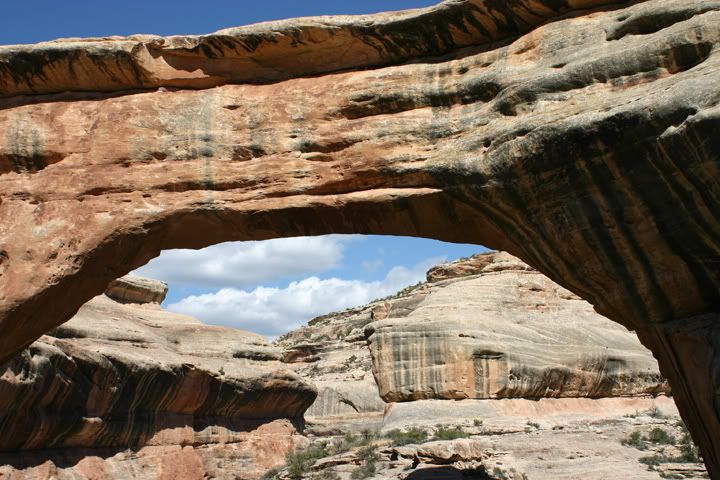
Birding Utah's Natural Bridges National Monument


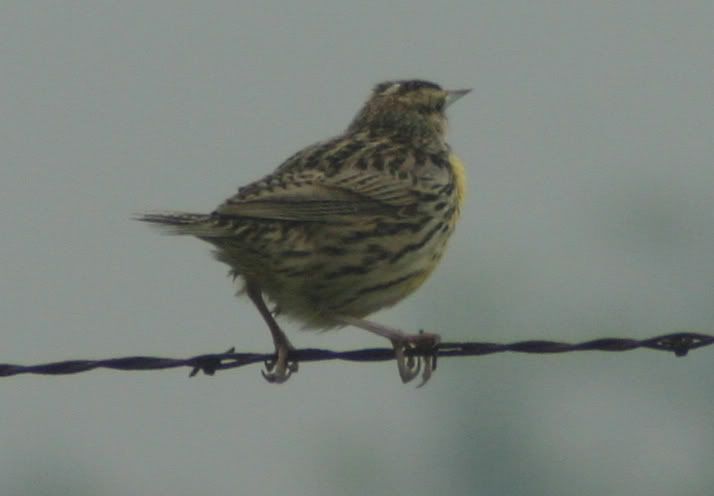
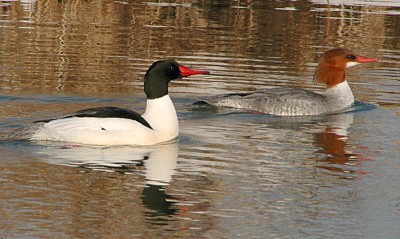
The drive from Aspen, Colorado to the Natural Bridges National Monument in Utah is about 6 hours. It's very pleasent driving, especially around Grand Junction, Colorado, and the birdlife at the roadside is plentiful. Before I left Colorado I saw FOY (first of year) Common Merganser, Osprey, American Kestrel (and lots of 'em), Wild Turkey and my first life bird of the trip, a Western Meadowlark:

Western Meadowlark from the back

At a small reststop in Kane Springs, UT I stopped to stretch my legs and was delighted to find a dozen or so White Throated Swifts cavorting in the air above. I've gotta say: these birds are stunning. Something about the black and white contrast of these birds really struck me. I went on to see hundreds more species on the rest of the trip but I don't think any were as beautiful as these swifts.

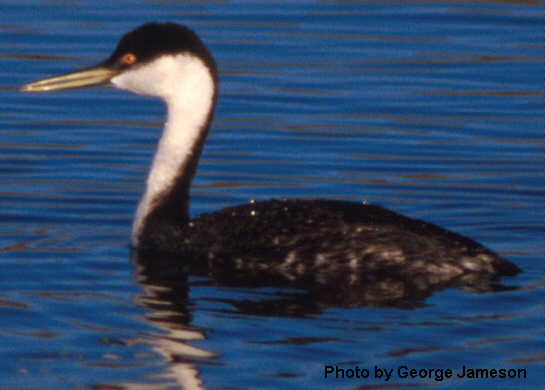
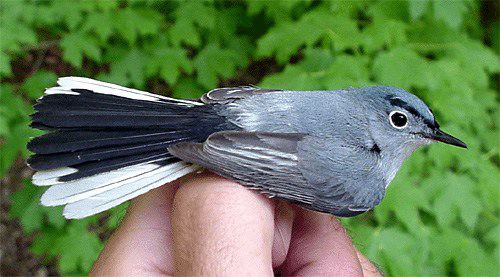
Anyway, I made one more stop before making it to NBNM. Somewhere on the outskirts of Montecello, Utah I spotted a group of large Grebes in a dammed reservior off the road. I pulled over and watched the small flock of Western Grebes float lazily on the water. Also making an appearance at the roadside were my FOY Blue-Gray Gnatcatcher and my lifer Rock Wren, which is much drabber than wrens I'm used to.

I rolled into the Natural Bridges National Monument at about 4pm...just enough time to set up my tent and get a good long hike in. I set off on the Loop Trail which would take me past at least 2 gigantic natural arches and along a hopefully birdy river. The trail, just to warn visitors, is not easy or well marked. Descending and ascending the canyon wall to the riverbed is also not easy and is definetly not recommended for anyone with problems walking.

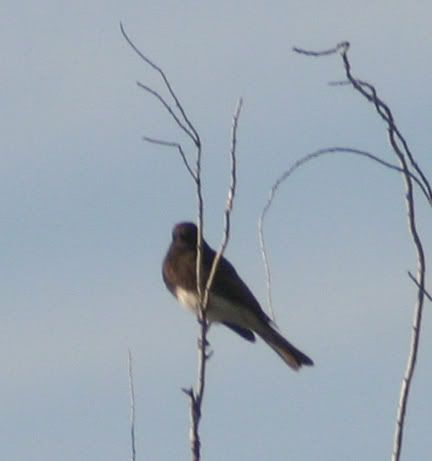
But it is certainly beautiful. Giant stone walls tower above as you follow the river. Birds were not overabundant, but were certainly around. My first was a lifer Spotted Towhee making a racket in the leaf litter...just like his eastern relative. Echoing off the canyon walls was the call of the Canyon Wren, a bird that I wasn't ever actually able to see. Further along I found three more life birds, a bunch of Virginia's Warblers (which looked a bit like my familiar Yellow-Rumped Warblers at first glance), a couple of ornery Bushtits and a beautiful pair of Black Pheobe.

One piece of advice for birding at the NBNM: know your birdcalls. I was on the trail as the day was getting late and there were a lot of birds calling. I am not used to birding in the west and most every single call was unknown to me. Had I known what I was hearing I've no doubt that I could have recognized 5-10 more species. Oh well.

After a rugged hike back out of the canyon I took the mesa trail back to my tent and on the way encountered my last new bird of the day: a pair of Juniper Titmice, a drabber cousin of my familiar Tufted Titmouse (in fact, a lot of these desert birds were pretty drab).

After about 5 miles of hiking in the Utah sun I finally made it back to my tent. Tired, satisfied and eager to get to Arzona, I fell asleep...and then woke up freezing because apparently the desert gets to like 20 degrees at night. Live and learn.

Birds:
Turkey Vulture
Raven (lots)
Cooper's Hawk
Black Pheobe
Virginia's Warbler
Rock Wren
Canyon Wren
Juniper Titmouse
Bushtit
Spotted Towhee
Hairy Woodpecker

Birds Missed:
hmm nothing really

Tomorrow: The Chiracahua Mtns and Coronado NF

Great American Birding Road Trip


Last Tuesday I left the lovely mountain town of Aspen, where I had been working for the winter, and began and epic journey across these United States back to my childhood home in Maine. Being an avid birder I could not resist the opportunity to pass through some of the country's most famous birding spots (during migration no less!), regardless of whether or not they were on a direct route to New England.

And so, loyal reader (haha), what is to follow will be the account of my journey. Over the next few days I will be writing about my experience at:
Natural Bridges National Monument, Utah
Coronado National Forest and Portal, Arizona
Lake Balmorhea, Texas
Pedernales Falls State Park, Texas
High Island, Texas
Dauphin Island, Alabama
Francis Marion National Forest, South Carolina

I write these in the hopes that other birders will come across it when they google something like "birding" + "lake balmorhea" and thus be given lots of helpful information and not fall into some of the pitfalls that I fell into. THUS BEGINS OUR JOURNEY!

OK well actually not yet. There are some things I'd like to thank for helping me come though in one piece.

-My 2002 Subaru Legacy sedan. This car was my trusty steed throughout the entire journey and never let me down. Whether it was whipping around the dangerous dirt roads of the Coronado National Forest or driving endless miles of our nation's highways, I always trusted that my car was there. The $1200 worth of exaust repair right before the trip didn't hurt either.

-My copy of The National Geographic Guide to Birding Hot Spots. This book was indespensible when it came to figuring out where I should go and what birds to expect there.

-The Sibley Guide to Birds. What can I say? Everything I need to know.

-My American Map 2006 Road Atlas. Very comprehensive. Never led me astray.

OK that's over with LET THE JOURNEY BEGIN!

About Us | Site Map | Privacy Policy | Contact Us | Blog Design | 2007 Company Name