Halloween is the best holiday. No honoring anything, no family obligations, no guilt trips, no presents to buy, just good old fashioned scaring each other and eating candy. Other than Valentine's Day (which is a baloney holiday cooked up by greeting card companies), Halloween is the only holiday that honors an emotion: fear. It's always seemed incredible to me that we would dedicate a day to scaring the crap out of each other, and that's part of the reason I love it.
I'm not sure what emotion that word "birder" evokes in non-birders. Unfortunately, it's probably "bored" or something. Those people are dumb. Birders experience the full spectrum of emotions: joy, disappointment, envy, lust, hope, anxiety, doubt, and, yes, fear. To prove it, I asked some birding friends to share with me their scariest birding stories. Read them below...IF YOU DARE!
Thursday, October 31, 2013
Scary Birding Stories!
Saturday, October 5, 2013
Let's Rename Some Birds After Different People
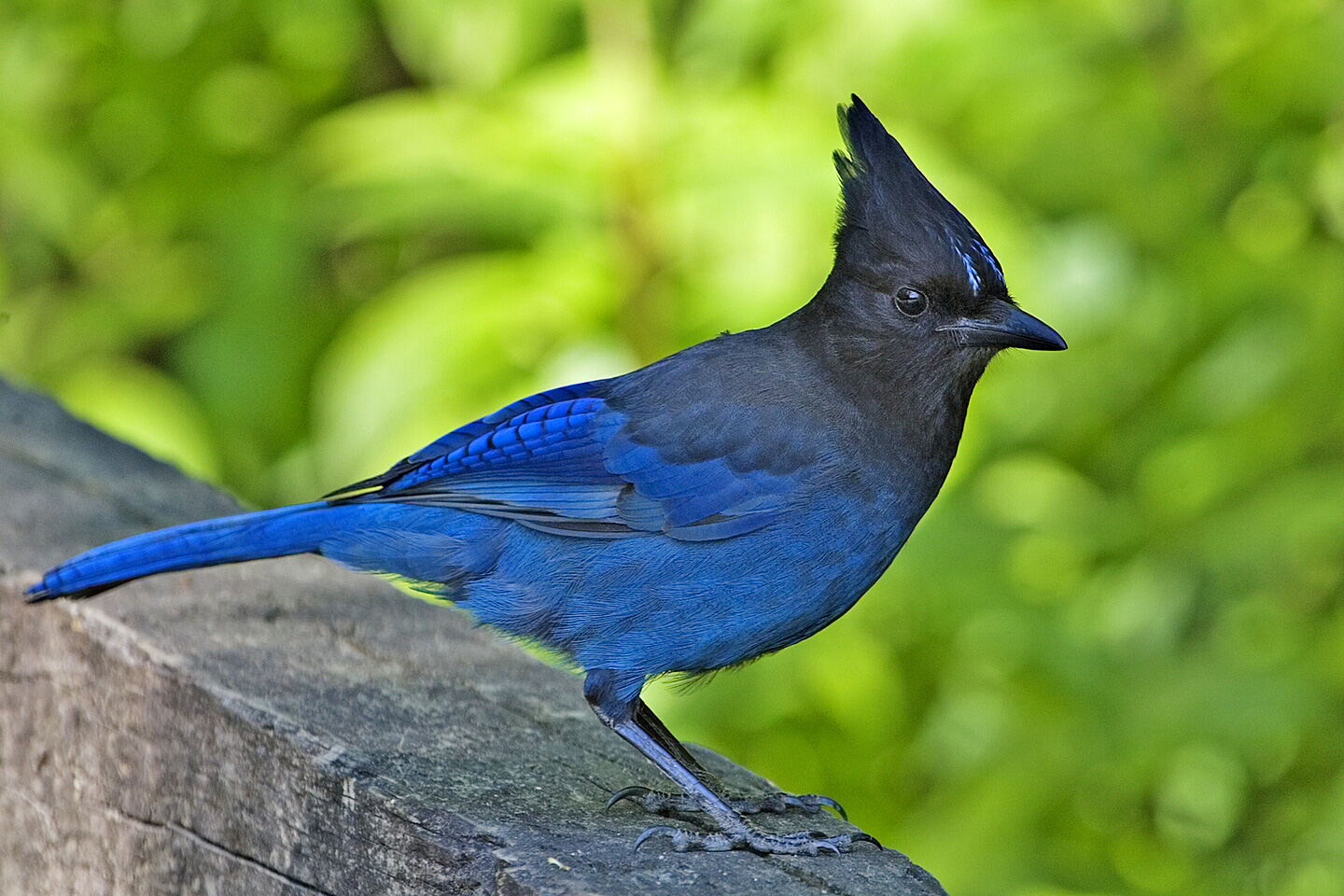
John Cassin. Georg Steller. Edward Harris. John Kirk Townsend. All of these guys have a couple things in common. First, they were each top-notch naturalists in the 18th and 19th centuries. Second, each are honored in the common names of multiple North American birds. Third, if it weren't for these species, current birders would probably say these guys' names a lot less frequently.
Having a species named after you is scientific immortality. It's the highest honor a naturalist can recieve. The naturalists listed above are each fully deserving of their species based on their contributions to scientific discovery, but it seems a problem remains - important scientific contributions to ornithology didn't stop in the 1800s. There have been plenty of people deserving of having a species of American bird named after them, why should these guys get more than one?
Labels: birding, history, natural history
Tuesday, October 1, 2013
Spy Birds
I've noticed a couple of stories in the news recently about birds being detained in foreign countries, suspected of being spies. Here is one from Egypt. Here's another recent one from Turkey.
In both of these cases, some folks saw a bird with tagged, either leg-banded or wearing a GPS backpack. The average bird not typically being accessorized, these people became suspicious that the birds had more complicated backstories, and detained the birds so they could be checked out by the authorities. In both cases, the birds were cleared of all "charges" and released.
These stories were represented as "News of the Odd" in the East, peppered with "in a case that ruffled feathers..." puns and "check out these wacky foreigners!" attitudes. It's a frustrating condescension, because these stories tell me something much more interesting and sad about the current state of things.
Saturday, September 21, 2013
Birding the Great Salt Lake
I've just returned from an epic two-week work/vacation road trip to the Rocky Mountain West. Salt Lake City, UT to Jackson, WY to Bozeman to Arco, ID back to Salt Lake City then to Park City before on to Zion and Bryce Canyon National Parks in the south. I'm jealous of myself just typing that.
| Eared Grebes, mostly, from the Antelope Island Causeway |
I want to use this space to talk about the most impressive birding sites I saw on the trip: those along the Great Salt Lake. Holy cow, you guys. I was able to spend some time at Bear River Migratory Bird Refuge on the north end of the lake, as well as at Antelope Island State Park. Being by far the largest body of water in the West, the Great Salt Lake is a gathering point (for breeding and wintering) for millions of birds. And I mean millions. I don't think I've ever seen concentrations of birds like I saw out there. What follows is going to be a lot of pictures of cool stuff. Click to enlarge.
![]() | |||
| Look for Bear River MBR along the northeastern side of the Lake, and Antelope Island SP on the southeast, where that bison is. |
Labels: Antelope Island, birding, Salt Lake City, utah
Sunday, September 8, 2013
Slate Update
Hi folks-
I am traveling in the West (typing this from beautiful Bozeman, Montana) but I wanted to update with a couple articles I published on Slate recently.
The first is a book review/personal essay for Peter Doherty's Their Fate is Our Fate
The second is about faked sightings of supposedly extinct species
I hope you enjoy! OK, off to find Gray Partridge in the morning.
Wednesday, August 28, 2013
Where Have New ABA Birds Been Found?
Below is a map of the locations of birds added to the ABA checklist since 2005. I expected everything to focused on Arizona and Attu, but there's actually a pretty good distribution around the borders of the country.
Couple notes:
- I only included new species, not splits (ie Pacific Wren)
- These are birds that were added to the ABA list since 2005, but may have been sighted much earlier.
- The list doesn't include birds that have been seen recently but aren't yet on the list officially, like the Rufous-necked Wood-Rail.
- pre-1990 - black
- 1990-2001 - gray
- 2002 - turquoise
- 2003 - none
- 2004 - green
- 2005 - orange
- 2006 - brown
- 2007 - purple
- 2008 - blue
- 2009 - pink
- 2010 - yellow
- 2011 - red
Labels: American Birding Association, birding, birds, maps, rare birds
Tuesday, August 20, 2013
Google Street View Birding II: Midway Atoll
I don't care what crabby commenters say, I think Google Street View Birding is fun as hell. Whenever I am bored for a few minutes at a computer, I can whisk myself away to far-off birding locations with the click of a mouse. Screw you, I'll get my jollies where I can.
Street View birding is hard, though. The resolution is never very good, and birds are rarely as close to the road as you want. I think I did a pretty good job my first time around, but I've stumbled onto something that makes all my previous attempts seem like watching an empty feeder in March. I've found what just might be the Shangri-La of Google Street View Birding: Midway Atoll.
As you (hopefully) remember, Midway Atoll was the site of a major battle in WWII and is still under the control of the U.S. government, which manages the island as Midway Atoll National Wildlife Refuge. And holy moses is there wildlife. Situated as they are in the middle of the Pacific, thousands and thousands of pelagic birds visit them to breed. I mean, thousands. Albatross, noddies, frigatebirds, terns, tropicbirds. And some lovely person from Google strapped on a camera backpack and walked around. Check it out:
HOLY LORD LOOK AT ALL THOSE BIRDS. The ENTIRE island is like this (Google maps only Street Views the western of the two breeding islands). It's insanity.
Using this very helpful website, I cruised around the island and tried to find as many species as I could. Midway is extra helpful from a Street View birding perspective because seabirds like this generally let folks come right up close, so you can see a lot of these birds in detail.
The majority of birds on the island are Laysan Albatross. In fact, 71% of the world's population - more than 452,000 pairs (over 1 million individuals) - breeds on Midway. Street Viewing your way around the island these birds are absolutely everywhere - on the runway, near the shore, in the bushes. So incredible. Wisdom, a 62-year old Laysan Albatross, also lives on the island. I tried to find her in Street View but could not (where's the green building shown here?).
Also numerous are Black-footed Albatross, including some with their faces blurred for some reason. There are more than 25,000 breeding pairs of these guys on Midway. There are also one or two Short-tailed Albatross on Midway, but I couldn't find them in Street View.
The island is also covered with the beautiful White Tern. In Street View they can be seen flying around almost everywhere, but above are some I caught in a tree. Gray-backed and Sooty Tern also breed at Midway, but on the other island.
Finally, this is a noddy, I think a Brown Noddy.
Great times Street View birding on Midway. I encourage others to check it out, for the spectacle alone. If you find any additional species, let me know.
This Google project is especially nice because these shots were taken in June 2012, just a year after a tsunami did major damage to the island's bird population. If you wonder whether the scientists of the island are proud to have their work catalogued in this way, check out this Street View shot from the middle of the island. Good work to all involved.