Friday, June 27, 2014

Google Street Maps Birding


I've created a monster.  A nerd monster.  (Instead of terrorizing cities he sits in his mother's cave and plays Basements & Humans).

Occasionally I pass the time slowly scrolling along random streets captured in Google Street View looking for birds.  I'm not proud of it, but as far as Things To Do go it's better than a heroin addition.  I've been able to find a bunch of birds and it's allowed me to travel All Over The WORLD!

There are other images of our world out there on the internet, and one reader, Greg of the Greg and Birds site, has started to find birds in them.  In Google Maps.  Overhead, satellite, far-away images of teeny-tiny birds.  I don't know how he did it, but Greg zoomed way into a lake on the southwest side of Indianapolis (here are the coordinates: 39.851657,-86.302702) and found a ... bird.  I'm not exactly sure what it is.  I captured a screenshot:


Greg suggested Great Egret but the structure doesn't look right.  Maybe its head is tucked up.  The wing shape looks to me more like a gull, but I don't know.  Guesses welcome.

Thank you Greg for this opening up incredible, pathetic new frontier.  God help me when I lose my job for spending the day scanning the backgrounds of real estate photos trying to identify passerines on feeders in the neighbor's yard.  It's an odd world, my friends.

[UPDATE]

Reader Urs Geider sent in a comment with a link to this screenshot showing 38.872515, -90.172794 (the Riverlands area in Missouri, across the Mississippi from Alton, IL). Looks like American White Pelicans to me!  Awesome!  Thanks, Urs.


Friday, June 20, 2014

A Bunch of Photos From My Trip to Alaska


I don't like posting trip reports.  When I started this dumpy website, I wanted to fill the gap in the bird blogosphere between Hey Here's A Cardinal In My Backyard bird blogs and Here Is Some Insane Endemic Trogon I Discovered On An Island blogs.  Reports of my lame 30-species-days were not my area of interest.

But, dear reader, screw you.  It's my damn website and if I go to Alaska and see a ton of cool shit and lug around some huge lens everywhere to get pictures, then you're going to have to look at them.  So buckle in.

A quick note - my autofocus doesn't work.  I lucked into a Canon 30d camera body when my friend, it's previous owner, dropped it into a saltwater swamp.  He went to upgrade, I inquired about the condition of the damp body, he said it sorta worked, the rest is history.  Most of the time the thing works fine, but the electronic connections are rusty and there's not much communication between the lens and the body.  So some of the photos aren't that great and aren't in good focus but who cares.  Just so you know.

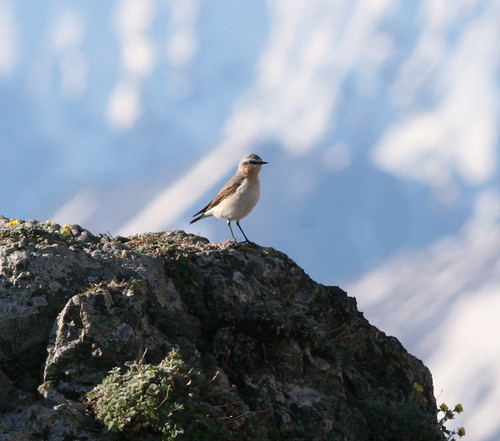
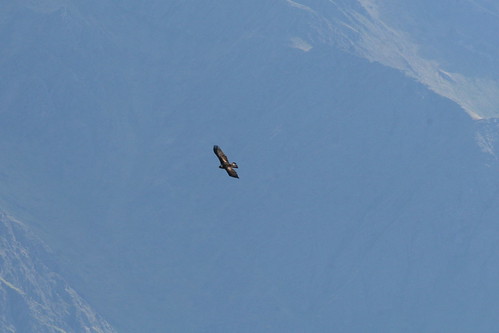
I traveled with my buddy Jake to Anchorage, Homer, Seward and Nome, Alaska.  I got 21 ABA lifers.  140 species total.  I drank a bunch of beers.  I saw musk oxen, sea otters, killer whales and guys smoking crack.  Here are some of the birds.

Northern Wheatear
Northern Wheatear

Golen Eagle
Golden Eagle

Monday, May 26, 2014

The Terrifying Face of Birding


I've been blasting this photo all over Twitter for the past few days, so apologies if you're stick of it.  Sorry, but I'm not sorry.  I cannot stop looking at it.  I'm not sure I'll ever be able to forget it.


Wednesday, May 7, 2014

Grading Bird-themed Minor League Baseball Teams


Baseball's long, slow, hot, gorgeous season has begun, not just in those cities hosting Major League teams but smaller cities and towns across the country.  According to this list on Wikipedia, there are 27 minor and independent leagues in North America, many with teams named after those most endearing and non-threatening of mascots: birds.

You likely haven't heard of most of these teams unless you live in one of America's small municipalities or, like, did a project in school about minor league teams or something.  Well, friend, relax.  Let me save you the trouble of figuring out which teams have done a good job with their avian themes, and which ones are unworthy of their winged mascots.

AAA - INTERNATIONAL LEAGUE

Rochester (NY) Red Wings

So, they got their name in 1929 when they became the St. Louis Cardinals farm team (bonus points there), and a few extra bonus points for at least having a bird mascot - the NHL Detroit Red Wings aren't named for birds - but what the hell is this?  Why would they do this?  It's not a real bird, or even close.  Turn this in to a tanager or something, or a real hawk, then we'll talk.

Grade: D


Toledo Mud Hens


History has it (via Wikipedia) that the Toldeo Mud Hens were originally the "Swamp Angels" but they became known as "Mud Hens" because the swamp they played in was filled with American Coots.  A cool story, and an interesting bird to be named after, but this frigging thing doesn't look like an American Coot at all.  What even is this?  Why is this?

Grade: C-


AAA - PACIFIC COAST LEAGUE

Memphis Redbirds

This is the first athletic use of a cardinal mascot that doesn't have a yellow bill.  Do you hear that?  THE FIRST ONE!  Problem is, it's a fucking red bill instead.  Is there a shortage of orange?  What does everyone have against orange?  Adding insult to injury, the mascot has a yellow bill.  I love Memphis, but I'm furious.

Grade: B- 


Oklahoma City RedHawks

 I just want to check and see if teams are allowed to use birds that aren't red.  Is that permitted?  Did Congress pass something when I wasn't looking?  What the shit is a RedHawk and why isn't it two words?  It's not a bird ugghhh and that bat would break his beak this is the worst day of my life.

Grade: C-


Sunday, April 20, 2014

Google Street View Birding III: Mexico


Street View Birding is perhaps the nerdiest thing I have ever done.  But I love it.  I love it guiltily, in the dark and when no one is looking, like a candy bar smuggled into Fat Camp.

For those unfamiliar (or unwilling), sometimes when I get bored I just cruise random spots in Google Street View and try to identify birds.  Street View Birding works like this: (1) zoom down into streetview on a place that looks good (2) look around to see if you see any birds (3) move around until you find a bird or you get too bored or your reconsider the path your life has taken.  That's it.  It's very challenging, because the resolution is never good enough and the birds are always too far away.  But, hey, that's the challenge.

I've been to Florida and Texas.  I cruised around what is likely the Street View Birding Mecca of Midway Atoll.  This time I'm south of the border.

I've never birded Mexico except for two weeks ago, when I heard and saw birds on the other side of the trickling Rio Grande in Big Bend National Park, but I've heard a lot about its birding.  Tropical forests in the south.  Deserts and grasslands elsewhere.  The Gulf of California.  I don't know much else about the country of Mexico, and I don't know its birds.  Sorry.  These IDs are all guesses so feel free to pitch in.

Let's go.

Baja California

I've heard that Baja is dangerous and whatever, but it looks pretty nice in streetview.  Some quaint little harbors.  Lots of cacti.  The first bird I found was on a cactus, and is probably a Gila Woodpecker.  See it circled in red there?  Click to enlarge.


I hit a good one next.  Real Life birders know that telephone poles and wires are a good place to look for sitting raptors, and Street View is no different.  On one pole along the Transpeninsular Highway outside the town of Santa Rosalia I found what I think is a Crested Caracara.  Pretty cool.


Wednesday, April 2, 2014

Birds at Large: Adorable Little Kids


My friend Ali teaches fourth graders in my home state of Maine.  A few weeks ago she posted a request to the teacher crowdfunding site DonorsChoose.org looking for some magazine subscriptions she could share with her students.  Being the selfless, helpful friend that I am, I chipped in to help the project along.  Soon after I was updated via email that my contribution, along with others, had helped the complete the project: the kids would be getting their magazines.  Good deed done.

But teachers being teachers and kids being kids, my meager contribution would not go un-thanked.  In fact, Ali (ahem, Ms. Roberts) told her students a few facts about me and had them write honest-to-goodness Thank You notes.  One of the facts about me Ms. Roberts told her kids was that I liked birds, and into my mailbox today arrived a set of lovely notes, fretted over and laboriously colored and spelled out by a bunch of innocent nine-year-olds.  On some of them were drawings of birds.

The worst bird drawings I've ever seen.

Look, I'm not here to pile on to the American educational system.  I'm sure these kids are trying as hard as they can.  But the fact the remains that none of the "birds" these kids drew resemble anything close to a real species.  Have any of them even seen a bird before? Isn't there a window they can look out of?

Maybe we should just take it one bird at a time.


Unbelievable.  I don't know all 10,000 of the world's bird species, but I can say with complete certainty that there is no rainbow-colored bird that craps Stars of David from the air.  I've tried to do the world a service by spreading the word about the myth of rainbow-colored birds, but apparently I'm not getting through to the younger generations.


A first cycle gull with a beak deformity?  A brown jay, also with a beak deformity?  Maybe this guy is allergic to bees and just got stung in the beak...but then why would he be smiling?  How can he even smile? Ugh.  


The reason this bird looks to uncomfortable is because he's shaped like a tube of toothpaste and only has one wing and a puff-ball tail.  He's a complete disaster, and I'm amazed he's even in the air.  Other than that, he sorta looks like a white-crowned sparrow.  Maybe he got stung by the same bees as the bird above, but they got him in the body.  And the tail.  And bit off a wing?


"Bird's rock" sounds like an eBird hotspot, or maybe the geologic feature that this unlucky creature is about to plummet into, beak-first.  They've named it in his honor, some sort of creepy preemptive memorial.  What's even happening to this guy?  Is that a butt wing?

Look, these kids are sweethearts for trying, but clearly the systemic cuts to STEM courses have prevented them from learning anything about actual bird species.  PLEASE CLICK HERE AND DONATE TO MS. ROBERTS' CLASS, maybe she can buy them some dang field guides.


Thursday, March 27, 2014

Making Avian Major League Baseball Logos More Accurate


God I love baseball.  It's the greatest American sport because it is a big fat apple pie baked with all the most American ingredients: quasi-athleticism, belts, anthems, expanses of green grass, bubble gum, sitting around, boozing, and fresh air.  It's the only sport I know where players can eat food while they're playing.   I've loved it forever.

Loved it longer than I've loved birding, in fact.  But that's another great thing about Major League Baseball - it treats birds pretty well.  There are three MLB teams named after birds: The Baltimore Orioles, the Toronto Blue Jays, and the St. Louis Cardinals.  First, these are great choices because they're specific.  No invented baloney "Thunder Falcons" or anything, not even generic "hawks" or "eagles." These are classic, small, passerines.  These are real birds.

In addition to the names of the teams, the logos do these birds justice.  For the most part they're accurate, ornithologically speaking.  For the most part, but not completely.

I wanted to take this opportunity to offer some edits to the logos of bird-named MLB teams, to see how different they'd look if given full respect to their avian inspirations.  Let's see how it'll look.

Toronto Blue Jays

The Blue Jays have a beautiful set of logos.  They'd tried to "toughen it up" a couple years ago, using logo showing an animated Jay angrily gripping a ball...but everyone knew it just wasn't them.  The side-facing Jay with the split blue and white lettering is the Blue Jays, and it came back to stay.  I grew up with them in powder blue, and I wouldn't mind it that came back full time.


Anyway, the Jays logo, frankly, takes few liberties with the actual Blue Jay.  The biggest difference - the only difference - is that the bill and neck stripe of the Blue Jay is black.  Well, the bill for sure.  The neck stripe is a bit tougher to see.  It's interesting, Blue Jays are such an easily-identified bird that field guides don't seem to pay much attention to the details.  It's tough to tell whether the neck is a midnight blue or a black, but most images see it as black, so I'll go with that.  A simple shift leads to a slightly different logo.


Interestingly, the Jays had shifted to black uniforms a few years ago, part of the "black for black's sake" (or BfBS) uniform trend highlighted by UniWatch.  The Jay's black uniforms were roundly criticized, partly because black wasn't a traditional part of their color scheme.  If the Blue Jays had simple changes their colors to more accurately reflect real Blue Jays, they could have adopted black uniforms with no problem.  Alas.

St. Louis Cardinals

One of the oldest and most storied franchises in pro baseball, St. Louis has been making cardinals cool for decades.  Northern Cardinals are an interesting case, they're not an intimidating or tough bird, but they're so colorful and common that they're one of the few birds that everyone knows.

As I've covered before, despite their ubiquity Northern Cardinals are frequently misrepresented in broader culture.  No one can seem to get the colors right, mostly insisting that they have bright yellow beaks.  They don't.  They just don't.


About Us | Site Map | Privacy Policy | Contact Us | Blog Design | 2007 Company Name